


|
|
 In English
 Suomeksi
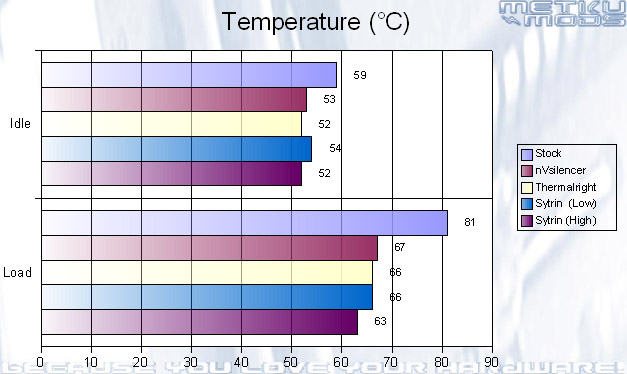
BenchmarksTemperatures were taken by Rivatuner. Idle temperatures were measured while idling on desktop and load temps were taken after Futuremark 3DMark had reached the maximum temperature and kept it stable for ten minutes. Tests were ran in a normal non-modded ATX case, without PCI cards and with a side panel closed. Motherboard in our test rig was a MSI K8N Diamond. As a side note; other coolers fit nicely but nVsilencer suffered a minor compatibility problems with the chipset cooler. Fotrunately that only caused some extra noise and didn't affect the temperature measurements in any way. |
VGA card in our test is a MSI Geforce 6600, 256 MB (NX6600 TD256E) which is budget card. The card originally comes with a tiny heatsink with noisy fan in the middle, which still is pretty common design in this budget class. Card did not have memory heatsinks. Card's original clock speed is 300 MHz for the GPU and 500 MHz for the memories. During the tests, GPU was overclocked to 380 MHz to increase the amount of heat it generated. Test results will also be compared to Arctic Cooling's nVsilencer 6.
Results
Competition was tight but Sytrin's KuFormula VF1 Plus at high RPM setting won by a slight margin. Differences were small and for example usually only by replacing silicon paste with silver paste one can make the similar differences appear. Next was Thermalright's V1 Ultra, losing only by 3 degrees in load temperatures. nVsilencer hold its own quite well but as one can see from the graph, MSI's original cooler were way hotter from the rest of the pack.
Personally I was bit surprised by the small difference between KuFormula VF1 running at high and low RPMs. Difference in noise was clear but in temperatures it was insifigant. Perhaps our test card was not putting out enough heat to stress the cooler enough?!
Unfortunately we were unable to get the SPL meter for our tests, so they are only based on my personal impressions. Most noise was produced by Sytrin's unit running at high RPM. On the other hand, while running at low RPM, the cooler was the most silent of all the four tested coolers.
NVsilencer alone is pretty silent. But in this test, with this particular motherboard the results were horrible. As the cooler totally blocked chipset cooler from getting cool air, it spin with full RPMs all the time. And you can imagine what kind of noise this kind of small 40x40 mm fan can produce.If you happen to have a motherboard with the chipset located straight behind the PCI-e slots, I suggest you think and measure twice before getting a nVsilencer.
Conclusion
|
|
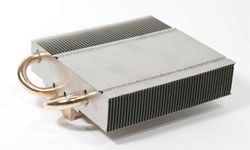

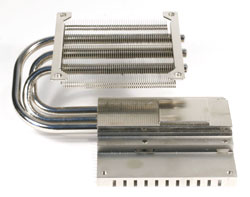

This little review clearly pointed out the differences between the original cooler and the more advanced 3rd party models. Both the GPU temperature and the overall noise were drop significantly. If you don't want to play with water just yet, these coolers are a good choice in air cooling.
There was no clear winner in this test. Temperatures didn't show any significant differences so differences had to be found from other matters, such as noise and ease of installation. In these categories Sytrin's KuFormula VF1 Plus, running at low RPM setting took a slight victory over the Thermalright's V1 Ultra. On the other hand, some may find the waste of two PCI slots too much. Modern motherboards usually have good enough sound and fast enough network connections for normal use, so I believe that most users will not miss good night sleep over some missed PCI slots.
 Questions or comments? Visit MetkuMods forum.
Additional Information 
|
Past related articles in MetkuModsReviews:- ThermoHawk 400 - Noctua & Coolink Heatpipe Coolers Mods: - Aluminum Spire - GPU cooler - CardFan |
 | Pages: 1 2 3 4 5 6 |  |
 Content in english!
 Sisältö suomeksi!